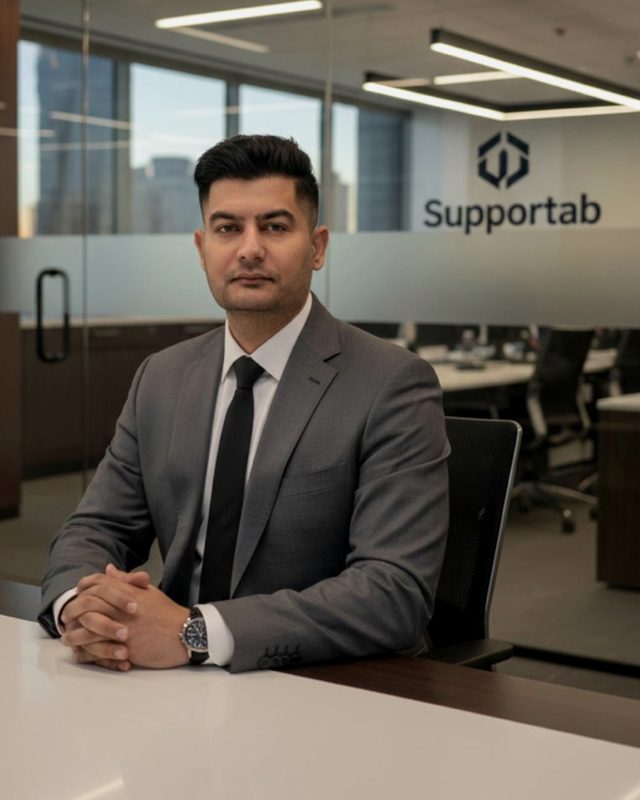
I'm Ashish Malhotra. I combine hands-on ecommerce experience, a structured growth system, and fast AI-powered implementation to help established brands identify what matters, act decisively, and build a more profitable business.
Revenue and ROAS are inputs. Contribution margin is what tells you whether growth is working.
Fix before you scale.
Spending more into a leaking page, a weak offer, or an operational bottleneck only makes the leak bigger.
AI needs direction.
The tools are available to everyone. Knowing what to point them at is the advantage.
Ashish MalhotraFounder, Supportab
A note from the founder
Hi, I'm Ashish. I help established ecommerce brands grow more profitably.
My experience comes from building and managing ecommerce businesses myself: running acquisition, reworking product pages and offers, dealing with fulfillment and customer experience, and watching what every decision did to the margin.
That work taught me something a lot of growth advice skips: the parts of an ecommerce business don't fail separately. A rising CPA can be a product page problem. A scaling problem can be a fulfillment problem. A revenue win can quietly be a margin loss.
AI now lets a focused team move faster than ever, and I use it every day. But AI doesn't know which problem matters most in your business. Deciding that, and judging whether the work is good, is what experience is for.
So I built Supportab around one idea: experienced judgment, a structured system, and fast execution, led by me directly. Not handed to a junior account team. Not split across disconnected vendors.
If you run an established brand and want clear priorities and disciplined execution, let's talk.
— Ashish
MissionMy mission is to help good ecommerce businesses become more profitable, better run, and more valuable over the long term.
Supportab is headquartered in Austin, Texas. Building and running my own brands meant building relationships well beyond it: people to hire, factories to make product, and the partners who keep it all moving. Those vetted relationships are part of what Supportab clients can tap into.
Austin, Texas
Headquarters
Strategy, priorities, and coordination are led from here. The extended network plugs into your plan from Austin.
Philippines · India
Talent
Relationships for hiring capable people to support your growth plan, from day-to-day operations to specialist roles, introduced and coordinated alongside the work.
China · India · Vietnam
Manufacturing
Manufacturing relationships for product development, sourcing, and production, for when product, cost, or supply is what's holding growth back.
How clients use it
Introductions to people and partners I've worked with or vetted through my own brands
Coordination of briefs, communication, timelines, and quality checks
Judgment on fit: which hub, which partner, and whether it's worth doing now
Introductions and coordination are scoped per engagement. Partners are independent businesses.
The problem
Growth gets harder when the pieces stop connecting.
Most established brands aren't short on tools, agencies, or ideas. The trouble is that ads, the store, offers, retention, and operations get managed separately, and the numbers stop adding up.
01
Acquisition costs rising faster than profit
Spend goes up and revenue follows, but contribution margin doesn't keep pace. Creative testing is inconsistent, and scaling starts to feel like a bet instead of a decision.
02
Conversion and order value holding everything back
Every visitor costs more than it used to. A product page that underconverts or an order value that's too thin makes every channel look worse than it really is.
03
Economics you can't see clearly
Dashboards disagree and attribution is unreliable. Nobody can say with confidence which spend is profitable once product cost, shipping, discounts, and returns come out.
04
Execution that's slow or fragmented
An agency runs ads, a freelancer edits the site, someone internal handles email. Priorities compete, handoffs stall, and the most important work waits.
Why experience matters
AI moves fast. Experience gives it direction.
Knowing what to build, what to fix, and where to invest comes from working inside real businesses. I bring that experience to your growth strategy, then use AI and a coordinated execution team to move the work forward.
What that looks like in practice
01
Fix conversion before raising spend.
If the product page is leaking buyers, more traffic only makes the leak more expensive. The first move is often the page, the offer, or the checkout, not the budget.
02
Judge growth by contribution margin.
Revenue and ROAS can rise while the business earns less. Decisions are measured against what's left after product cost, shipping, discounts, fees, and ad spend.
03
Read a test before scaling it.
A creative that wins for three days isn't a strategy. Knowing when a result is signal, when it's noise, and when to stop keeps testing productive.
04
Know when operations are the constraint.
Sometimes growth is capped by inventory, fulfillment, or customer support, not marketing. Spending into a constraint creates problems faster than it creates revenue.
What you get
You already have AI tools. What turns them into outcomes is judgment, a system, and implementation.
Profitable growth, where all three overlap
01
Experience
Practical judgment from building and operating ecommerce businesses, applied directly to your priorities.
02
System
A repeatable approach that connects acquisition, creative, conversion, retention, and unit economics.
03
Speed
AI-powered implementation and coordinated team execution that turn decisions into completed work.
04
Know-how
A working understanding of the tradeoffs behind budgets, offers, margins, customer behavior, and operations.
Services
Four areas of work. One growth plan.
Each area is managed against the same priorities and the same economics, so ads, site, offers, and retention work together instead of competing for credit.
01
Customer acquisition & creative
When this is the issue
Rising costs, inconsistent creative output, and scaling decisions made on gut feel or platform-reported ROAS.
What you receive
Meta and Google Ads strategy and management
Creative strategy, briefs, and a structured testing cadence
Budget allocation across campaigns and channels, based on margin
Scaling rules for when to push, hold, or pull back
Other channels where the economics support it
For example Shifting budget away from a campaign with strong ROAS on low-margin products toward one that earns more per order.
02
Conversion & customer value
When this is the issue
Paid traffic landing on pages that don't convert, thin order values, and customers who buy once and disappear.
What you receive
Shopify product page and landing page improvements
Offer, bundle, and pricing structure
Cart and checkout friction fixes
Order value levers: bundles, thresholds, post-purchase offers
Retention flows and repeat-purchase programs that build LTV
For example Turning a bestseller into a bundle that raises order value without discounting the hero product.
03
Growth intelligence
When this is the issue
Reports that disagree, attribution nobody trusts, and no shared view of which spend is actually profitable.
What you receive
Measurement and tracking review
An attribution approach that's fit for decision-making
Contribution margin reporting by channel, product, and period
A ranked list of the highest-value opportunities
Regular reviews that turn numbers into decisions
For example A weekly contribution margin view, so spend decisions aren't made on platform-reported revenue alone.
04
AI & operating execution
When this is the issue
A plan that stalls in handoffs, repetitive work that eats your team's time, too many disconnected vendors, and not enough capable people to do the work.
What you receive
AI agents and automations for research, reporting, and production work
Workflows that connect your tools and remove manual steps
Coordinated team execution against one shared priority list
Introductions to vetted talent in the Philippines and India, with hiring and onboarding coordinated
Clear ownership, cadence, and status on every workstream
For example Using AI to draft creative variations and product page copy, with the team producing and launching the selected ones so testing keeps pace with the plan.
Beyond the four areas: sourcing, manufacturing, fulfillment, and talent
Some growth problems are operational. Through the brands I've built, I have relationships for manufacturing in China, India, and Vietnam and for hiring in the Philippines and India. Where your plan calls for it, I make introductions and help coordinate sourcing, production, fulfillment, or hiring. These, along with exit preparation and due diligence support, are scoped as tailored engagements rather than standalone departments.
Our Method
A method, not a formula.
Every engagement moves through four stages. The order matters: fix what's broken before scaling, and scale with discipline before building for the long term.
01
Diagnose
Understand the economics and find the problems that matter most.
02
Stabilize
Fix the biggest leaks and make measurement reliable.
03
Scale
Expand what works through disciplined testing and investment.
04
Compound
Build repeat revenue, systems, and long-term value.
I'm closely connected with, and work alongside, founders and operators of 8- and 9-figure D2C brands. Those relationships keep my thinking grounded in what's working right now, and they give Supportab clients access to experience well beyond any one brand.
01
Pattern recognition from operators at scale
Seeing how brands further down the road handled the problems you're facing now helps me spot what matters sooner, and what to skip.
02
Vetted introductions to partners and vendors
When you need an agency, a specialist, a tool, or an operator, I can introduce people that founders I trust have actually worked with.
03
Peer-tested playbooks, not theory
The approaches I bring have been tested by people running real businesses, then adapted to your economics before anything ships.
Introductions are made where they're relevant, and only with both sides' agreement.
Selected work
Brands I've built and managed.
SimplyInked
Temporary and semi-permanent tattoos, including custom designs, sold online in the US and India.
Established ecommerce brands, especially on Shopify, with existing sales and a meaningful ad budget, led by founders who want:
Direct involvement from an experienced operator, not a handoff to a junior account team
Clear priorities, ranked by their effect on profit
Disciplined execution and straightforward reporting
A long-term partnership rather than a one-off project
Probably not the right fit if
You're pre-launch or still validating product–market fit
You're looking for a one-off audit or the lowest-cost option
You want activity reports more than decisions
FAQ
Questions founders usually ask
How involved are you personally?
Directly. I lead the strategy, set priorities, review the work, and interpret the results with you. The execution team implements, but decisions about what to do and why stay with me.
What does an engagement include?
Scope is shaped by what we learn in the diagnostic. Most engagements combine several of the four service areas, managed as one plan with a regular review cadence. Scope, priorities, and responsibilities are agreed in writing before work begins.
How do you use AI?
Practically, every day. AI speeds up research, analysis, creative development, copywriting, reporting, and automation. Every output starts from a clear priority and is reviewed before it reaches your customers or informs a decision. AI accelerates the work; experience decides what the work should be.
Can you work alongside our existing team or agencies?
Yes. Many brands already have an agency, freelancers, or an internal team. Part of the work is clarifying who owns what so everyone works from the same priorities. Sometimes that means coordinating with existing partners; sometimes it means consolidating work.
What happens in the Growth Diagnostic?
It starts with understanding your business: your economics, channels, site, customers, and constraints. We talk through what's working and what isn't, and assess whether there's a good fit. It isn't a comprehensive free audit and doesn't come with guaranteed deliverables. It's the first step in deciding whether and how to work together.
What results should we expect?
I don't promise specific numbers up front. The aim is more profitable growth through clearer priorities and better execution. What's realistic depends on your starting point, which is exactly what the diagnostic is for.
What does it cost?
Engagements are tailored to the business, so there's no standard price list. The first step is a conversation to understand your business and confirm there's a fit. Scope and terms follow from there.
Who does the work, and where?
Supportab is headquartered in Austin, Texas. I lead the strategy, set priorities, and review the work. Execution is handled by a coordinated team. Through the brands I've built and the business connections around them, I also have a network for hiring talent in the Philippines and India, and manufacturing relationships in China, India, and Vietnam. Where it helps your plan, I make introductions and coordinate the work, so you get access without building those relationships from scratch.
Know your numbers.
Fix what leaks.
Scale what works.
Build what compounds.
Start with a conversation about your business.
Tell me a little about your brand. If there's a fit, the Growth Diagnostic is where we look at your economics, priorities, and constraints together.